
Lip & Tongue-Tie Treatment Lexington
A Short Guide for Frustrated Parents

If you’re unfamiliar with lip and tongue-tie or the issues it can cause in patients of all ages, our team would be happy to assist you and answer any questions. While these concerns may seem small at first, chewing and speaking can become much more difficult as children age. Thankfully, a C02 laser release can create gentle, newfound freedom for smiles.
What are Tongue-Ties & Lip-Ties? I Think My Baby Has a Lip or Tongue-Tie. What Should I Look For? I Think My Older Child Has a Lip or Tongue-Tie, What Should I Look For? The Lip & Tongue-Tie Treatment Process Why is a Laser Better for Lip & Tongue-Tie Treatment? What Happens After My Child’s Lip & Tongue-Tie Treatment? Benefits of Lip & Tongue-Tie Treatment Ready to Get Started? We’re Here to Help
What are Tongue-Ties & Lip-Ties?

A tongue-tie is a physical restriction that limits its movement and affects about 20% of people, while a lip-tie restricts upper lip mobility. Because the tongue and lips are key to many oral functions, these can lead to challenges with feeding, speech, sleep, and breathing. Left untreated, they may even contribute to headaches, neck/shoulder pain, dental problems, and sleep issues well into adulthood.
I Think My Baby Has a Lip or Tongue-Tie, What Should I Look For?

When an infant has a lip or tongue-tie, there are many signs both the child and mom may exhibit:
Baby’s Symptoms

- Shallow or ineffective latching
- Slow or inadequate weight gain
- Reflux-like symptoms or frequent spit-up
- Excessive gas and irritability
- Clicking or popping sounds during feeding
- Milk leaking from the sides of the mouth
- Fussiness or frustration while feeding
- Trouble keeping a pacifier in
- Nursing or bottle-feeding that takes an unusually long time
Mom’s Symptoms

- Discomfort or pain during breastfeeding
- Flattened or misshapen nipples after nursing
- Cracked, blistered, or sore nipples
- Sensation of incomplete breast emptying
- Recurring clogged ducts or mastitis
- Dependence on a nipple shield to nurse
-
Reduced or declining milk production
I Think My Older Child Has a Lip or Tongue-Tie. What Should I Look For?

While most closely associated with infants, tongue and lip ties can frequently be missed in early life and cause problems for toddlers and older children. This can lead to concerns with:
Speech

Tongue restrictions can impact speech in a wide variety of ways. Some children with a visible, to-the-tip tie may speak clearly but have to exert more effort, while others with less obvious posterior ties may struggle with delays or specific sounds like L, R, T, D, N, TH, SH, and Z. In our office, we’ve seen remarkable improvements following tongue-tie release, including better articulation, faster speech, clearer communication, and reduced frustration.
Feeding

Tongue-tied children often experience feeding challenges starting in infancy, including difficulty nursing or taking a bottle. As they begin solid foods, they may gag, choke, or struggle with specific textures. This can continue into childhood, showing up as slow eating, picky eating, stuffing food in their cheeks, or avoidance of certain foods – especially soft textures and meats. These habits can lead to nutritional concerns and mealtime stress.
Sleep

Many tongue-tied children experience sleep-related issues like teeth grinding, snoring, or restless sleep. These symptoms often stem from the tongue falling back and narrowing the airway instead of resting properly on the palate. Releasing a tongue-tie can help restore this natural position, leading to deeper, more restful sleep. Sleep-disordered breathing may cause frequent waking, bed-wetting, and difficulty focusing, which is often misdiagnosed as ADD or ADHD.
The Lip & Tongue-Tie Treatment Process
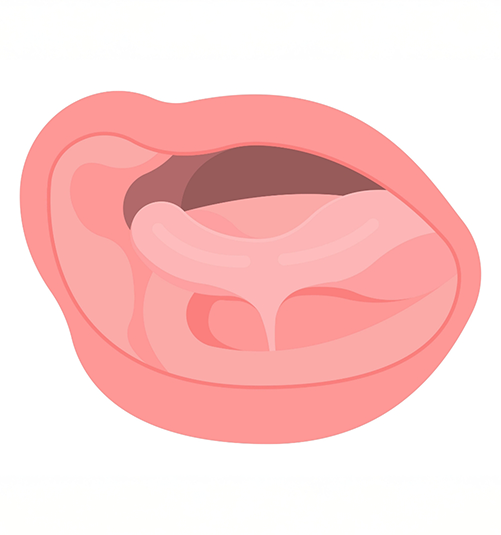
After hearing your concerns and performing a thorough evaluation, we’ll work with you to uncover the true source of your child’s challenges. If a tongue or lip-tie is identified, we go beyond a basic snip or clip, providing a complete, precise release the first time. This quick, effective procedure is done without sedation or general anesthesia, ensuring a safe and gentle experience.
- Release: With our advanced CO2 laser, we quickly and efficiently release ties in just 10-15 seconds, often with little to no bleeding.
- Recover: After the procedure, babies can immediately return to mom and nurse if needed, while older kids can head straight to the playground!
-
Re-check: We’ll provide simple exercises to do at home for optimal results and follow up one week later. For patients traveling from afar, we offer virtual re-checks for convenience.
Why is a Laser Better for Lip & Tongue-Tie Treatment?

We believe in C02 laser treatment for lip and tongue-tie treatment because the process is far less invasive, gentler, and quicker than traditional surgery. Lasers do more than just simply cut the tissue – they also provide effective sterilization to the treatment site and promote a faster healing process with clotting. Suturing is seldom needed, and the process overall is so precise that final results are incredibly safe and predictable.
What Happens After My Child’s Lip & Tongue-Tie Treatment?

When your child undergoes a tongue- or lip-tie release, it’s important to understand that improvement doesn’t always happen right away. The tongue, like any muscle, has adapted to working with the restriction. Once released, your child’s brain needs time to relearn how to use the tongue effectively.
While some parents notice instant improvements in nursing, it’s completely normal for progress to take time. There may even be a brief period of regression as your child adjusts to the newfound freedom and learns how to use their tongue properly. Patience is key as they develop these new skills.
Benefits of Lip & Tongue-Tie Treatment

There are several short-term and long-term benefits that should follow lip & tongue-tie treatment, both for children and moms.
Babies May Experience:

- Better milk transfer during feedings
- Reduced fussiness/gassiness
- Longer periods of restful sleep
- More successful weight gain
Moms May Experience:

- Alleviated nipple pain/cracks/bleeding
- More successful, efficient feedings
- Improved breast drainage/reduction
More long-term effects include improved speech and oral health, an ability to enjoy foods more, improved breathing, and even relief from chronic TMJ pain.
Ready to Get Started? We’re Here to Help

If you suspect that your child is dealing with a lip or tongue-tie, schedule a consultation with Northeast Lip and Tongue-Tie Center to get peace of mind. We’re ready to listen, perform a thorough, comprehensive evaluation, and provide answers as well as a proven solution.